Osaka residents often treat their own city like a postcard—something tourists photograph while locals rush past on their way to work. This summer changes that calculation. The past few months have seen a quiet wave of openings and festivals that make exploring your own backyard feel less like obligation and more like discovery.
The timing matters. Europe is grappling with extreme heat events, and Japan's urban centres are no exception. Osaka logged 37.2 degrees Celsius on June 28, according to Japan Meteorological Agency data. That kind of temperature reshapes where people actually go and what they actually do. Air-conditioned museums beat crowded shopping malls. Early morning walks through riverside parks beat afternoon errands. The lifestyle rhythm of the city shifts when the weather shifts.
Cultural Spaces Worth Your Time
The Osaka Museum of History on Otemae-cho in Chuo Ward has extended its summer hours until 7 p.m. on Fridays and Saturdays through August. The museum's new permanent exhibition on Edo-period merchant culture opened in May, and it's built around actual artifacts rather than the usual interpretive panels. More importantly, it sits on the grounds of Osaka Castle, which means you can walk the grounds before ducking inside when the heat peaks. Admission runs 600 yen for adults, 400 yen for high school students.
If museums feel too stationary, the Abeno Harukas complex in Abeno Ward has become something different this summer. The observation deck, normally packed with tourists craning for views of Osaka Bay, gets quiet by 6 p.m. Locals have started using it as an evening ritual—ascend at dusk, watch the city lights come on in real time, descend with dinner plans made. It costs 2,100 yen, but you're paying for solitude as much as perspective.
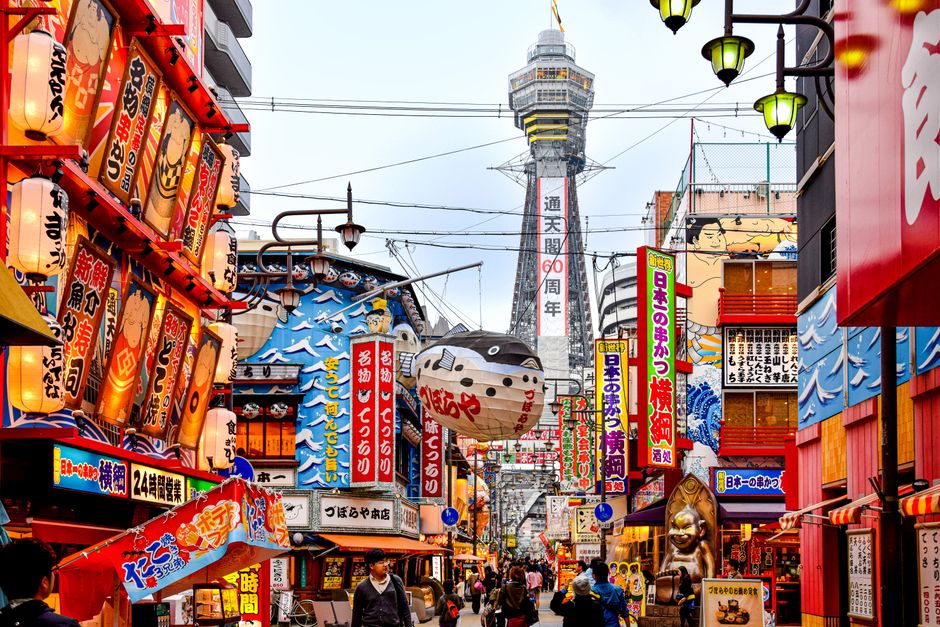
Dotonbori has also shifted. The riverfront here stays cooler than the surrounding streets, and the food vendors have adjusted their menus. Takoyaki stands now sell cold versions alongside the traditional hot offerings. The Okawa River boat tours, which run every 15 minutes during summer season, offer genuine relief—literally floating through air that moves and water that matters. Tours depart from near the Ebisubashi bridge and cost 2,600 yen per person for the 50-minute circuit.
Seasonal Food and Markets
Kuromon Market, the covered wholesale market running along Nipponbashi Dori in Chuo Ward, is where the city actually eats. Summer here means fresh unagi season alongside mountain vegetables shipped in from Wakayama Prefecture. The market opened in 1820 and it still operates as a genuine working market, not a theme park version of one. Walk through between 7 and 10 a.m. when vendors are stocking and the energy is actual rather than performed. A perfectly prepared unagi lunch here costs between 1,200 and 2,000 yen, depending on the stall.
The Taisho Roman district around Shinchi has become the neighbourhood for food festivals this summer. Every Thursday through August, vendors set up temporary stalls selling regional specialties from across the Kansai region—Kobe beef, Takayama soba, local sake from breweries that rarely distribute beyond their home prefectures. It's the kind of thing that happens every summer, but most residents never notice because it doesn't announce itself loudly.
Data from the Osaka Convention and Visitors Bureau shows that domestic leisure visits to the city jumped 34 percent year-on-year in spring 2026, with residents accounting for a larger share of those visits than in previous years. People aren't just visiting Osaka anymore—they're actually choosing to spend their limited free time here.
The practical move now is simple: pick one neighbourhood you rarely visit. Spend a morning there when it opens. Have breakfast at a place you've passed a hundred times. Don't make a schedule. The heat will force you to slow down, and Osaka, properly explored at that pace, stops feeling routine.