Corporate investment into Osaka hit ¥2.3 trillion in the first half of 2026, according to figures released this week by the Osaka Business Investment Point — a 14 percent jump over the same period last year and the strongest six-month showing since before the pandemic disrupted global supply chains. The numbers signal something that veteran Kansai dealmakers have been quietly saying for months: the city is in the middle of a genuine capital cycle, not just a post-COVID bounce.
The timing matters because the global backdrop is complicated. Geopolitical turbulence — Iran's leadership transition following the death of Ayatollah Khamenei, a fragile political shift in Peru, and continuing trade friction between major economies — is pushing institutional money toward stable, high-infrastructure markets. Osaka benefits directly from that flight to reliability. Kansai International Airport recorded 4.1 million international arrivals in May 2026 alone, its busiest month on record, and the visitor economy is feeding a broader cycle of retail, hospitality, and logistics investment that is hard to ignore if you are allocating capital in Asia right now.
Where the Money Is Landing
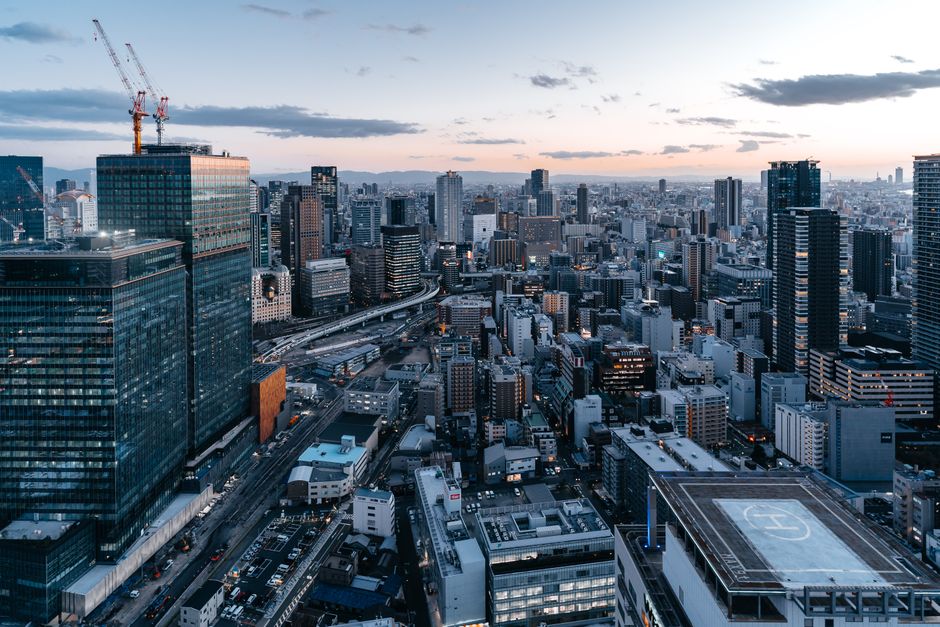
The Umeda district remains the most obvious magnet. Grand Front Osaka's North Building has seen its office vacancy rate drop to 3.2 percent as of June, down from 6.8 percent eighteen months ago, and asking rents on Grade A floors have climbed to around ¥22,000 per tsubo per month. Tenants include financial technology firms, regional headquarters for European manufacturers, and at least three logistics-tech startups that relocated from Tokyo in the past year seeking lower overhead and proximity to the port complex at Nanko.
The Namba and Shinsaibashi corridor is absorbing a different category of investor: consumer and retail capital chasing the tourist spend. South Korean and Taiwanese retail groups have opened flagship stores along Midosuji Boulevard this spring, and the Osaka City Urban Development Authority approved in May a ¥45 billion mixed-use redevelopment anchored near Namba Parks that is expected to break ground before the end of 2026. The Expo 2025 infrastructure — particularly the new metro connections linking Yumeshima to Hommachi in under twenty minutes — is giving developers confidence to commit to projects that would have felt speculative three years ago.
Two sectors that business owners should watch closely are semiconductor-adjacent manufacturing and data infrastructure. Rapidus's facility in Chitose has drawn substantial attention nationally, and while that plant is in Hokkaido, its supply chain ripple is being felt in Osaka. At least seven component suppliers have quietly expanded their Kansai footprints since April, clustering around the Morikoji and Hirano districts in the city's eastern manufacturing belt. Meanwhile, NTT's announcement of a new Osaka-area data centre campus — scheduled for partial opening in the first quarter of 2027 — is pulling cloud services and digital infrastructure firms into the market ahead of the facility's completion.
What Business Leaders Should Do Before Year-End
The practical picture for companies operating in or entering Osaka is this: the next two quarters represent a narrowing opportunity. Office rents in Umeda are projected by Miki Shoji Co. to rise a further four to six percent by December 2026 as vacancy continues to tighten. Any business still hunting for central Osaka space should be making decisions now, not waiting for post-summer clarity. The Osaka Prefectural Government's Invest Osaka program still offers subsidy windows for qualifying foreign companies establishing regional headquarters — applications for the October intake close August 29.
Equally important is currency exposure. The yen has been trading in the ¥152–¥156 band against the dollar for most of 2026, which keeps Japanese assets attractively priced for dollar-denominated investors but compresses margins for companies importing goods. Businesses with dollar-yen exposure should be locking in hedging strategies now rather than betting on a sustained yen recovery.
The Kansai Economic Federation's mid-year outlook, released June 30, projects regional GDP growth of 2.4 percent for 2026 — above the national forecast of 1.9 percent. That gap reflects Osaka's structural advantages: port access, Expo legacy infrastructure, and a manufacturing ecosystem that is proving more adaptable than many analysts expected. Companies that treat the second half of 2026 as a holding period risk waking up in early 2027 to find the entry points they ignored are gone.