Japan already has one of the shortest average sleep durations of any developed nation, and Osaka is not helping itself. A 2024 survey by the Japanese Ministry of Health, Labour and Welfare found that roughly 40 percent of Japanese adults sleep fewer than six hours on weeknights — a figure that sleep researchers regard as a chronic deprivation threshold, not a quirk of culture. In Osaka, where Namba's neon stays bright past 3 a.m. and the Shinkansen restarts before 6, that number tracks.
The timing matters. Hormone research published earlier this year has reignited public interest in how melatonin, cortisol and related biochemistry shape sleep quality — and how ordinary lifestyle choices either support or sabotage those systems. For a city that prides itself on active, food-forward living, the gap between Osaka's wellness reputation and its actual sleep data is striking.
Several forces are compounding the problem simultaneously. Remote and hybrid work arrangements, which spread through large employers along the Midosuji Line corridor after 2020 and never fully reversed, have eroded the hard boundary between office hours and home hours. Screens — phones, tablets, the ambient glow of delivery-app notifications — suppress melatonin production in the two hours before sleep. And then there is the konbini problem: Family Mart and Lawson locations throughout Minami and Kitashinchi are stocked with energising sports drinks, strong coffee in 185 ml cans, and high-sodium snacks at midnight, all of which push the nervous system in exactly the wrong direction for rest.
Where Osaka's Wellness Community Is Pushing Back
A small but serious counter-movement has taken root. The Osaka Prefectural Government's Kenkou Osaka 21 programme, which entered its third phase in April 2025, now includes explicit sleep-literacy targets alongside its better-known smoking and exercise goals. The programme funds community health talks at neighbourhood centres across wards including Tennoji, Fukushima and Naniwa, specifically addressing sleep hygiene for adults over 40.
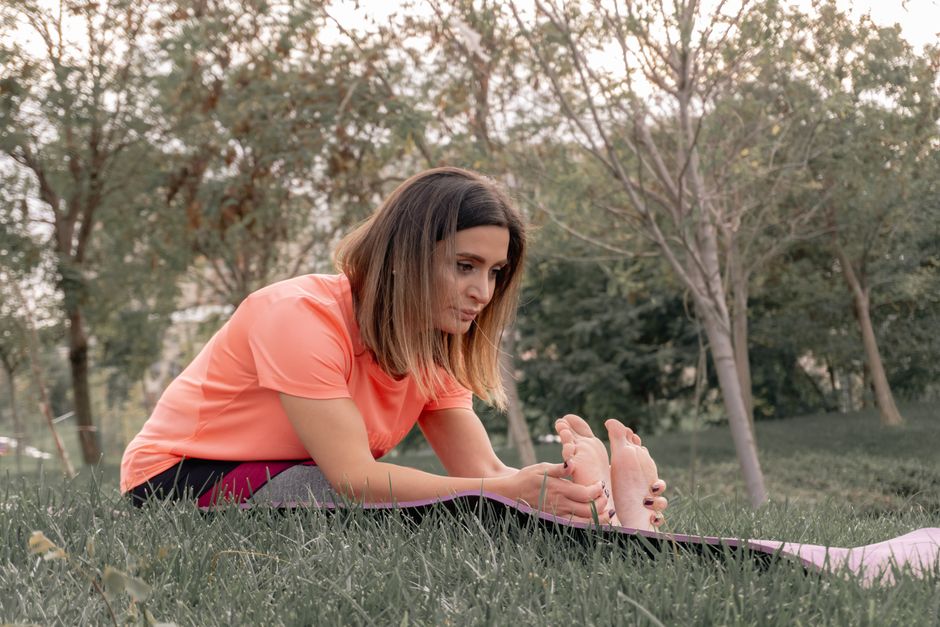
On the commercial side, the wellness studio Sora to Umi near Tanimachi 4-chome has built a late-afternoon yoga flow class — ending at 7 p.m. — specifically designed around circadian timing. The logic: intense exercise before 9 p.m. slightly raises core body temperature, which then drops during the following two hours, triggering the physiological conditions for deep sleep. Classes run six days a week and cost ¥1,800 per session or ¥9,500 for a monthly pass. Demand has been high enough that they added a Thursday session in May.
Pharmacies in Shinsaibashi and along Tenjinbashisuji shopping street — at 2.6 kilometres, the longest covered shopping street in Japan — have expanded their melatonin-adjacent supplement sections. Low-dose supplements containing l-theanine and chamomile extract, priced between ¥1,200 and ¥2,800, are now displayed alongside traditional herbal remedies rather than tucked behind the pharmacy counter. Staff report that customers in their 30s and early 40s are driving the uptick.
Practical Steps, Grounded in What the Research Actually Says
Sleep specialists consistently point to a short list of evidence-backed interventions. Keeping a fixed wake time — even on weekends — is the single most effective anchor for the circadian system, more powerful than any supplement. Blue-light-filtering glasses or phone settings help, but the more direct fix is simply putting devices away 90 minutes before bed. A cool bedroom, ideally between 16 and 19 degrees Celsius, accelerates the drop in core temperature that the body needs to initiate deep sleep.
Osaka's summers complicate this. July humidity in the city regularly pushes past 75 percent, and running air conditioning all night raises electricity bills — a real consideration when summer power costs have climbed alongside broader energy prices this year. A compromise used by some residents: cool the room aggressively for the first two hours of sleep, then set the AC to a timer shutoff or a milder 26-degree hold mode.
Diet timing matters too. Osaka's food culture, celebrated for kuidaore — eating until you drop — tends toward late, heavy meals. Clinicians suggest finishing dinner at least three hours before sleep, which in a city where izakayas in Hozenji Yokocho start filling up at 7 p.m. requires deliberate planning rather than willpower alone.
Anyone experiencing persistent insomnia, early-morning waking or daytime exhaustion lasting more than three weeks should speak with a local GP or visit one of the sleep consultation clinics operating at the Osaka University Hospital in Suita, rather than self-diagnosing from wellness content. The data is clear. The solutions exist. The harder part, as ever, is Osaka slowing down long enough to use them.